Wedding day schedule: a full-day template
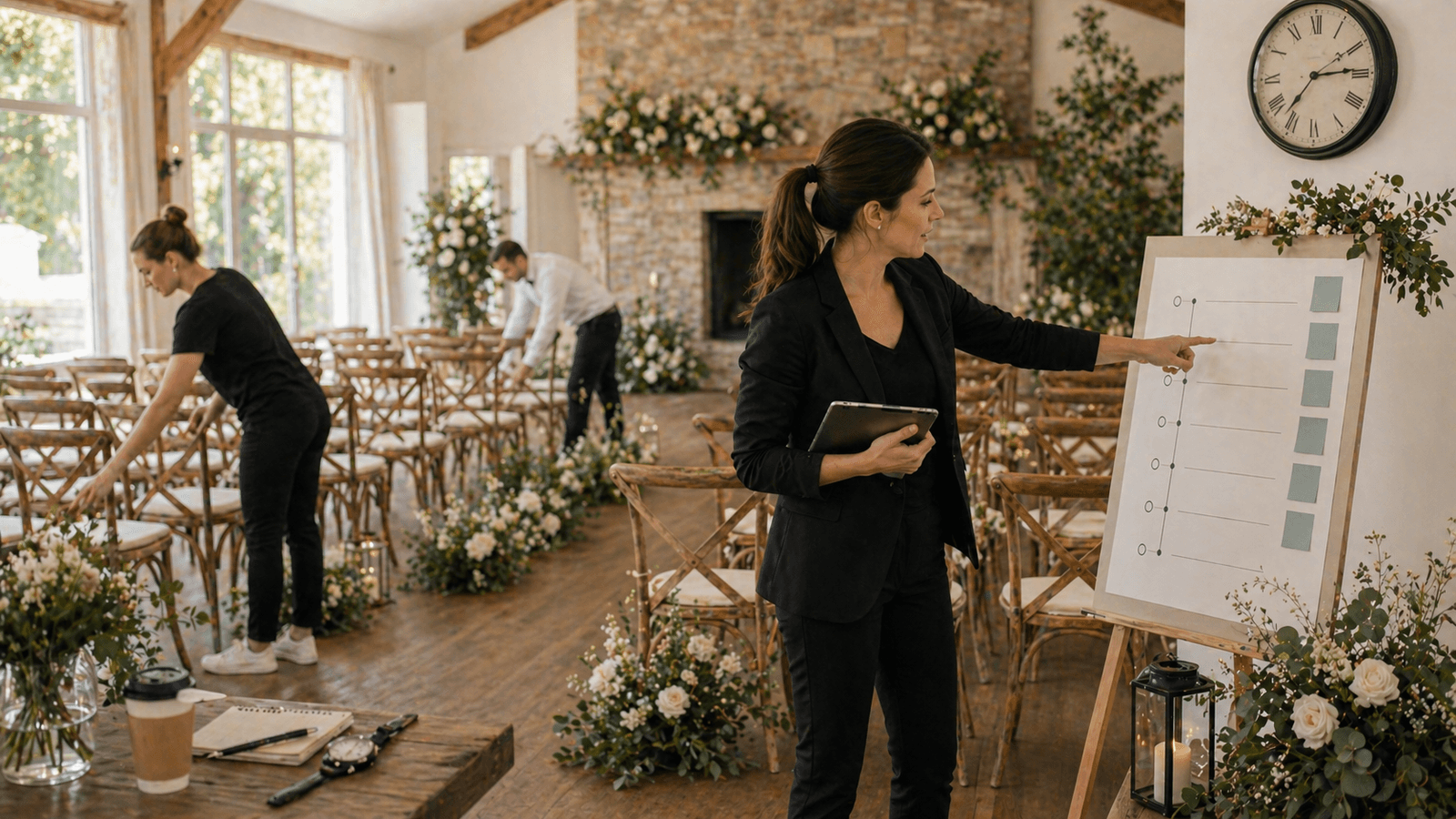
A good wedding schedule is not a minute-by-minute plan. It is a plan that holds the day together, gives your suppliers a clear rhythm and still leaves room for emotions, delays and spontaneous moments. The biggest mistake is planning the programme without any buffer, because a wedding day almost always runs slower than it looks on paper.
Below is a template for a wedding with the ceremony around 2 pm, the meal at the same venue and an evening party. Treat the times as a starting model. If your ceremony is in the morning, you have several transfers or a church ceremony, move the blocks and add more buffer.
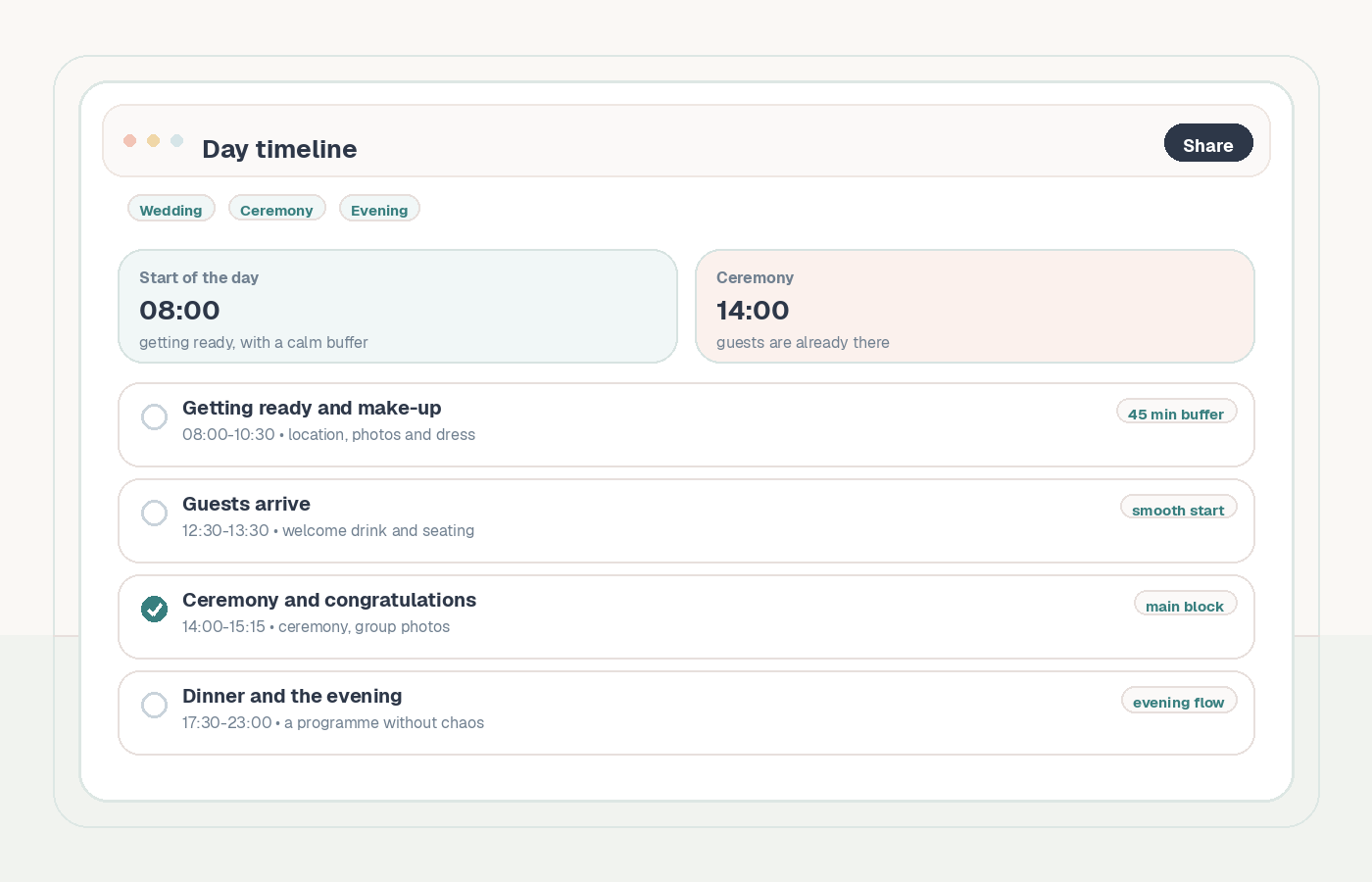 A simple template for splitting the day into calm blocks with buffer time.
Wedding day schedule template
-
08:00-10:30 preparations for the bride, the groom, the witnesses and the details. The photographer should have time for the dress, rings, stationery, bouquet and natural moments from the preparations.
-
10:30-11:30 first portraits, a first look or a calm couple shoot. If the two of you don't want to see each other before the ceremony, use this block for family preparations and the transfer.
-
11:30-12:30 light refreshments, a check of the decorations, suppliers arriving and the last technical details. This is when microphones, ceremony music, guest seating and signs get sorted.
-
12:30-13:30 guests arrive. Guests need to know clearly where to park, where to leave gifts and where to get water or prosecco.
-
14:00-14:40 ceremony. Allow time for congratulations, a group photo and a short pause to catch your breath.
-
14:45-16:00 group photos and drinks reception. A list of photo combinations prepared in advance speeds up the group photos.
-
16:00-18:00 wedding meal. A toast, soup, the main course, short speeches and a stretch when nothing else should be rushed.
-
18:00-19:00 couple photos in the golden hour or a quiet break. A shorter, beautiful shoot in good light is better than a long shoot in the middle of chaos.
-
19:00-20:00 cake, first dance and opening the dance floor. Agree the order with the DJ, the photographer and the caterer.
-
20:00-24:00 evening party, photo booth, QR gallery, buffet and a looser programme.
Where to build in buffer time
-
The biggest buffers belong between the preparations and the ceremony, between the ceremony and the meal, and before the first dance. For transfers between venues, count not only the drive but also guests getting into cars, parking, finding the cloakroom and waiting for latecomers.
-
If you are planning group photos, write down the exact combinations in advance: parents, grandparents, siblings, witnesses, friends. One person should round up the guests, otherwise the photographer loses time looking for people.
How to share the schedule
-
Guests only need a simple public version: arrival, ceremony, meal, cake, first dance and the end of the main programme. Suppliers need a more detailed version with contacts, transfers, addresses, the names of the people in charge and technical notes.
-
If you use a wedding website or online planning, connect the schedule with your tasks, guest list and other practical information. Guests don't need a complicated document, but they should easily see when and where things happen.
Frequently asked questions
When should the wedding day start?
For a typical afternoon wedding, start the preparations around 8:00. If there are many bridesmaids, complicated make-up or a longer transfer, start earlier.
Does the first dance have to come right after dinner?
No. It often works best after the cake, when guests are more relaxed and the photographer and DJ have a clear moment to open the evening.
What to open next
Wedding venues on this topic
Related articles
- How to plan a wedding step by stepA simple wedding plan from the engagement to the wedding day: budget, venue, guests, suppliers, schedule and final checks.
- Wedding checklistA wedding checklist from the engagement to the big day: venue, registry office, guests, suppliers, dress, rings, schedule and final checks.
- Everything to arrange for a weddingAn overview of everything you need to arrange for a wedding: the registry office, venue, guests, suppliers, budget, schedule and the day itself.